

Angelina Terlizzi: Conservation in Action

Angelina Terlizzi is a senior majoring in natural resources with an emphasis in conservation biology at the University of Arizona.
Terlizzi began her studies at the U of A on the pre-veterinary track, but her sophomore year, she took a zoo and aquarium conservation course that opened her eyes to a broader world of wildlife research and biodiversity.
In this Q&A, Angelina shares what inspired her interest in conservation, how students can help promote sustainability on campus, and why environmental awareness matters in every field of study.
What inspired you to choose your major, and what kinds of careers or projects are you interested in pursuing in the future?
Originally, I attended veterinary assistant school during high school, and I accumulated more than 2,000 hours of veterinary experience and worked as a veterinary technician at a local small animal hospital. This early exposure gave me a strong foundation in animal care and an understanding of the practical challenges involved in supporting animal health and welfare.
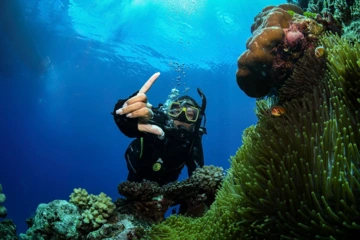
During my first semester of sophomore year, I took a course called Zoo and Aquarium Conservation, which completely shifted my perspective. I discovered a deeper passion for conservation and the critical role it plays in sustaining biodiversity and promoting animal welfare on a broader scale. This course inspired me to switch from a strictly medical path to one that integrates research, conservation, and direct engagement with animals.
I am particularly interested in zoological research, especially involving marine mammals. I hope to contribute to scientific studies and conservation initiatives that advance our understanding of these species, while also applying my animal care experience to improve their welfare and management. Ultimately, my goal is to bridge the gap between rigorous scientific research and practical conservation action so that both animals and ecosystems can thrive.
What kinds of environmental or conservation activities have you been involved with at the University of Arizona?
I’ve been an active member of the Marine Awareness and Conservation Society at the University of Arizona for the past three years. Since it’s the university’s only marine-focused club, we work hard to promote marine conservation even from a landlocked state.
One of the ways we make marine science education more interactive and memorable is by giving people the opportunity to see preserved marine specimens up close and learn about different species. We also use outreach events at zoos, aquariums, museums, and schools throughout Tucson to talk with people about why healthy oceans matter, and how our everyday choices can influence marine ecosystems, no matter where we live.
Doing this outreach work has deepened my understanding of conservation issues and given me the chance to inspire younger generations to care about the ocean and feel empowered to make a difference.
What’s the most interesting project or class you’ve worked on related to the environment?
One of the most interesting projects I’ve worked on was in my Zoo and Aquarium Conservation class, where I collaborated with three classmates on a behavioral research study at the Reid Park Zoo.
The zoo cares for four female African wild dogs, three of whom are spayed and one who remains intact. Our study focused on whether the intact female would show stronger hierarchical or dominant behaviors compared to the spayed individuals.
Over the course of three months, we conducted systematic observations and recorded detailed behavioral data for all four dogs. Our findings supported our initial prediction: the intact female consistently displayed more dominant behaviors and occupied a higher position within the social hierarchy.
This project was especially meaningful to me because it bridged research, animal behavior, and conservation practice. I gained firsthand experience with observational methods and data collection, and our project was able to help demonstrate how management decisions in zoos can support natural social dynamics.
Have you had any hands-on experiences, like fieldwork or internships, that shaped your understanding of sustainability?
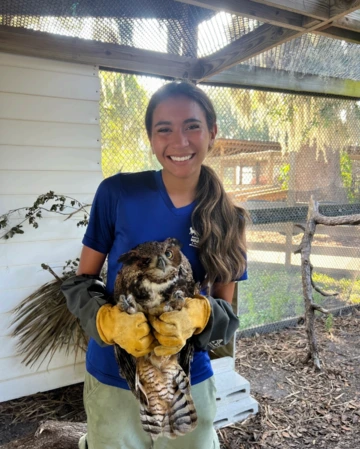
I’ve been fortunate to gain a variety of hands-on experiences that have shaped my understanding of sustainability and conservation. I interned at a wildlife refuge in Orlando, Florida, and later worked in SeaWorld Orlando’s zoological department, focusing on species conservation, habitat management, and research in wildlife protection.
I also volunteered with the Arizona-Sonora Desert Museum’s stingray care team, applying animal husbandry skills while helping visitors understand the ecological importance of aquatic species.
Most recently, I became an ambassador for 4ocean, which has involved supporting initiatives that address marine pollution and promote more sustainable choices.
These experiences have shown me that sustainability depends not only on direct conservation work but also on educating and engaging communities to drive long-term environmental change.
Why do you think it’s important for students, even those not studying environmental fields, to care about sustainability and natural resources?
I think it’s important for all students, even those outside environmental fields, to care about sustainability because the choices we make every day shape both our communities and the natural world.
Sustainability isn’t just about ecosystems; it involves people, equity, and collaboration. No matter what someone studies, understanding how our actions affect natural resources and society helps us make more thoughtful decisions.
When students across all disciplines engage with sustainability, they bring diverse perspectives and skills that can drive meaningful, lasting change and help create a healthier, more resilient future.
How do you think your generation can make the biggest impact on environmental issues?
I think our generation can make the biggest impact on environmental issues by combining awareness, innovation, and collective action.
By staying informed and advocating for policies that protect natural resources, we can influence meaningful change at both local and global levels. Just as importantly, adopting sustainable habits like reducing waste, choosing responsible products, and supporting eco-friendly initiatives helps normalize environmentally conscious behavior.
Because our generation is so connected, we can use education, social media, and community involvement to amplify these efforts, inspire others, and build momentum toward a more sustainable future.